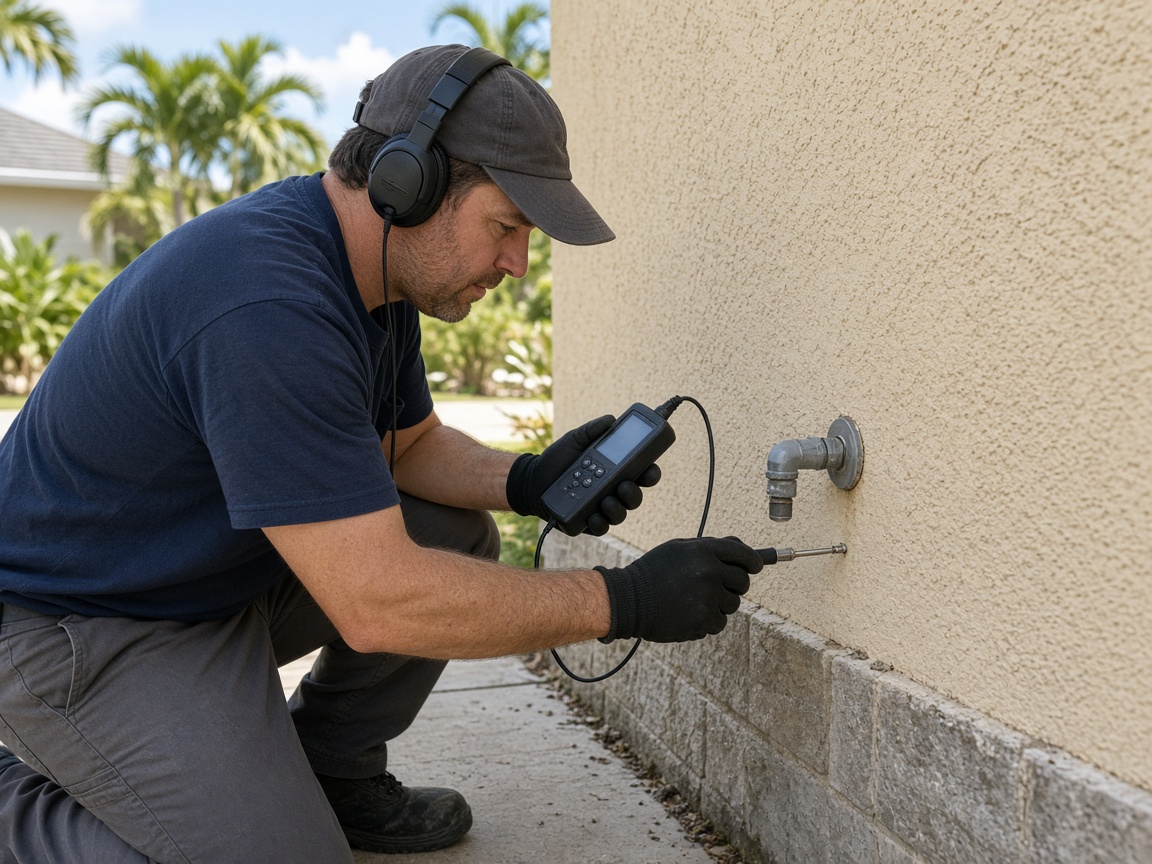
Water leak detection in Boynton Beach often starts with understanding how the local tropical climate and older housing stock interact. Homes in Downtown Boynton Beach and nearby Ocean Ridge frequently feature original copper or galvanized lines installed decades ago. High humidity and warm winters keep soil moisture elevated year-round, which can mask small leaks until they reach a slab or foundation. Technicians rely on acoustic listening devices, thermal imaging, and pressure testing rather than excavation first because the water table near the Boynton Beach Inlet stays relatively high.
Golfview and areas closer to the Arthur R. Marshall Loxahatchee National Wildlife Refuge present additional variables. Sandy soils mixed with occasional clay pockets shift during heavy summer rains, stressing joints and creating hairline cracks that standard visual checks miss. Leak detection here requires mapping the exact route of supply lines before any walls or slabs are opened. Technicians also check for leaks at irrigation tie-ins, which are common in Palm Beach County yards and can send water toward the house undetected.
Nearby Delray Beach and Lake Worth share similar plumbing challenges, but Boynton Beach properties often sit on slightly lower lots that collect runoff. This makes slab leaks more likely after prolonged wet periods. Detection crews document flow rates at multiple points and use video scoping on accessible lines to confirm the source without unnecessary demolition. The goal is always to isolate the leak location within inches before any repair plan is discussed.
Seasonal Considerations for Detection
Summer humidity and frequent afternoon storms in Palm Beach County raise groundwater levels, which can temporarily hide slow leaks. Winter brings drier conditions that make pressure drops more noticeable during testing. Scheduling detection after a dry spell often yields clearer results than right after heavy rain.
Technician insight
In Boynton Beach, the thing that catches most people out with Water Leak Detection is how the high water table near the inlet and older slab construction in Downtown Boynton Beach let small leaks stay hidden until they reach the foundation. Homeowners often assume a wet spot means a recent break, but the sandy-clay soil and summer rains here shift pipes gradually over years.
Slab Leak in Golfview Home
A homeowner in Golfview noticed warm floors and rising water use. Detection equipment traced the issue to a shifted copper line under the slab caused by seasonal soil movement. The team mapped the line, confirmed the leak point with pressure isolation, and marked the spot for targeted repair without opening the entire floor.
How it works
- 1
Initial Assessment
Review the property layout in neighborhoods such as Downtown Boynton Beach or Ocean Ridge and note recent water bill changes or damp spots.
- 2
Non-Invasive Testing
Apply acoustic sensors and thermal cameras to trace lines without cutting into slabs or walls.
- 3
Confirmation and Mapping
Use pressure tests and video inspection to pinpoint the exact leak location relative to the home's foundation.
- 4
Report and Options
Provide a clear diagram and discuss access points before any repair work begins.
Pricing
Cost depends on home age, access to lines, and whether multiple detection methods are required.