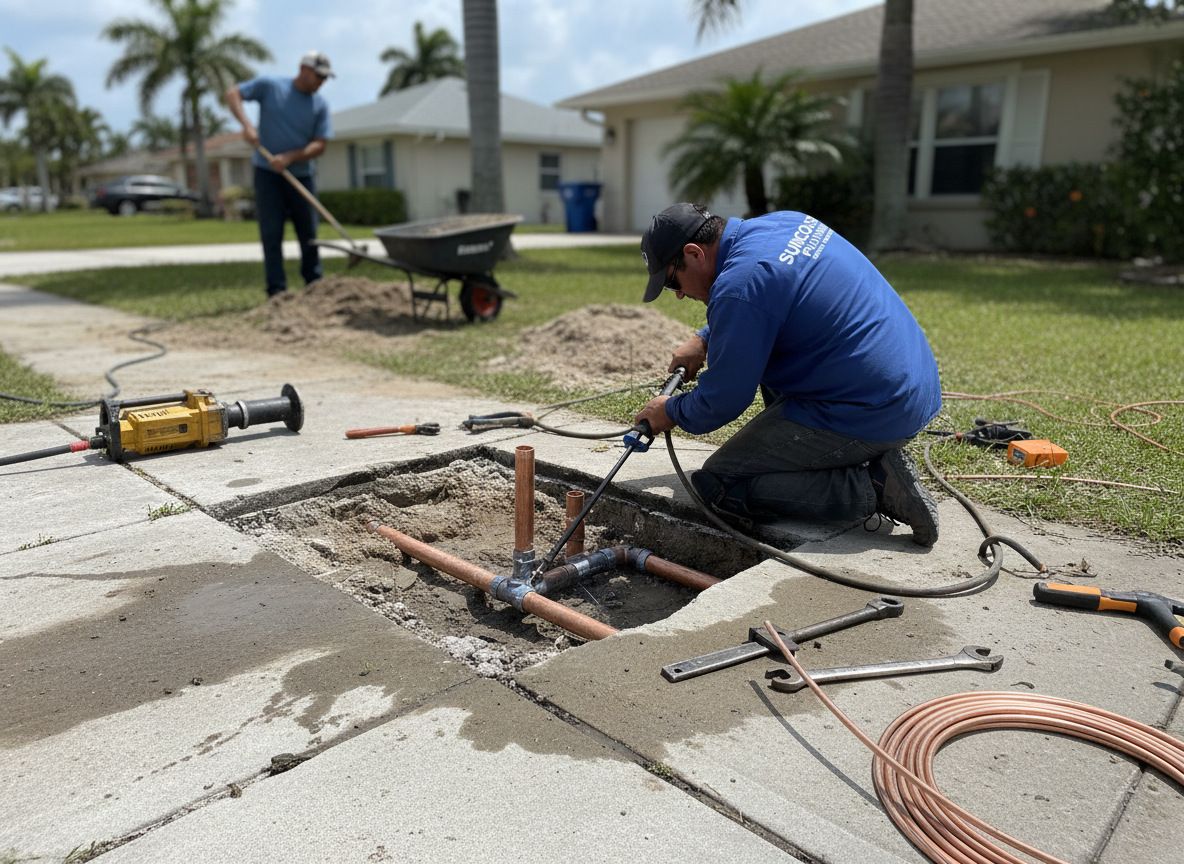
Slab leaks in Boynton Beach often stem from corrosion in older copper lines common in homes built before the 1990s in Downtown Boynton Beach and Golfview. High humidity and warm winters accelerate pipe degradation, while seasonal heavy rains raise the water table and push moisture against foundations. Technicians use acoustic listening devices and thermal imaging to pinpoint leaks without tearing up entire floors, especially important near the Boynton Beach Inlet where soil shifts are frequent.
Access in Ocean Ridge neighborhoods requires careful routing around septic systems and shallow utilities that differ from newer construction in Delray Beach. Once located, epoxy lining or sectional repiping minimizes disruption compared to full slab removal. Local codes in Palm Beach County mandate permits for any excavation exceeding a certain depth, and crews must account for the sandy, corrosive soil that speeds up future failures if not properly backfilled and compacted.
Edge cases include leaks under attached garages or pool decks common in Golfview, where vibration from nearby traffic along Federal Highway can worsen hairline cracks. Technicians carry specialized slab saws and moisture meters to confirm dryness before patching, preventing mold growth in the humid climate. Homeowners in Lake Worth often discover these leaks only after unexplained spikes in water bills during peak summer usage.
Technician insight
In Boynton Beach, the thing that catches most people out with Slab Leak Repair is the combination of older slab-on-grade homes in Downtown Boynton Beach and the high water table near the Boynton Beach Inlet. Homeowners often try DIY epoxy kits that fail within months because they never address the sandy soil movement that continues shifting the pipe after the patch.
Ocean Ridge Slab Leak
Homeowner in Ocean Ridge noticed rising water bills and damp carpet edges. Inspection found a pinhole leak in a 1980s copper line under the living room slab. Crew used thermal imaging to limit access to one 2x3 ft opening, installed an epoxy liner, pressure-tested, and restored the tile. No further moisture detected after the next heavy rain.
How it works
- 1
Initial Assessment
Technician arrives at the Boynton Beach address and reviews water usage history plus visible signs like warm floors or low pressure.
- 2
Non-Invasive Detection
Equipment locates the leak while avoiding unnecessary demolition in areas with high water tables near the inlet.
- 3
Targeted Access and Repair
Small section opened, damaged line replaced or lined, then tested under pressure before closing.
- 4
Restoration and Verification
Floor or surface restored to match existing finishes, with final walkthrough confirming no active moisture.
Pricing
Upfront quotes provided after on-site inspection; cost driven by access difficulty, pipe material, and whether lining or full replacement is needed.